Joshua Tree National Park Guide: Hikes, Climbing & Dark Skies
· By GoldenPath Guide Editorial Team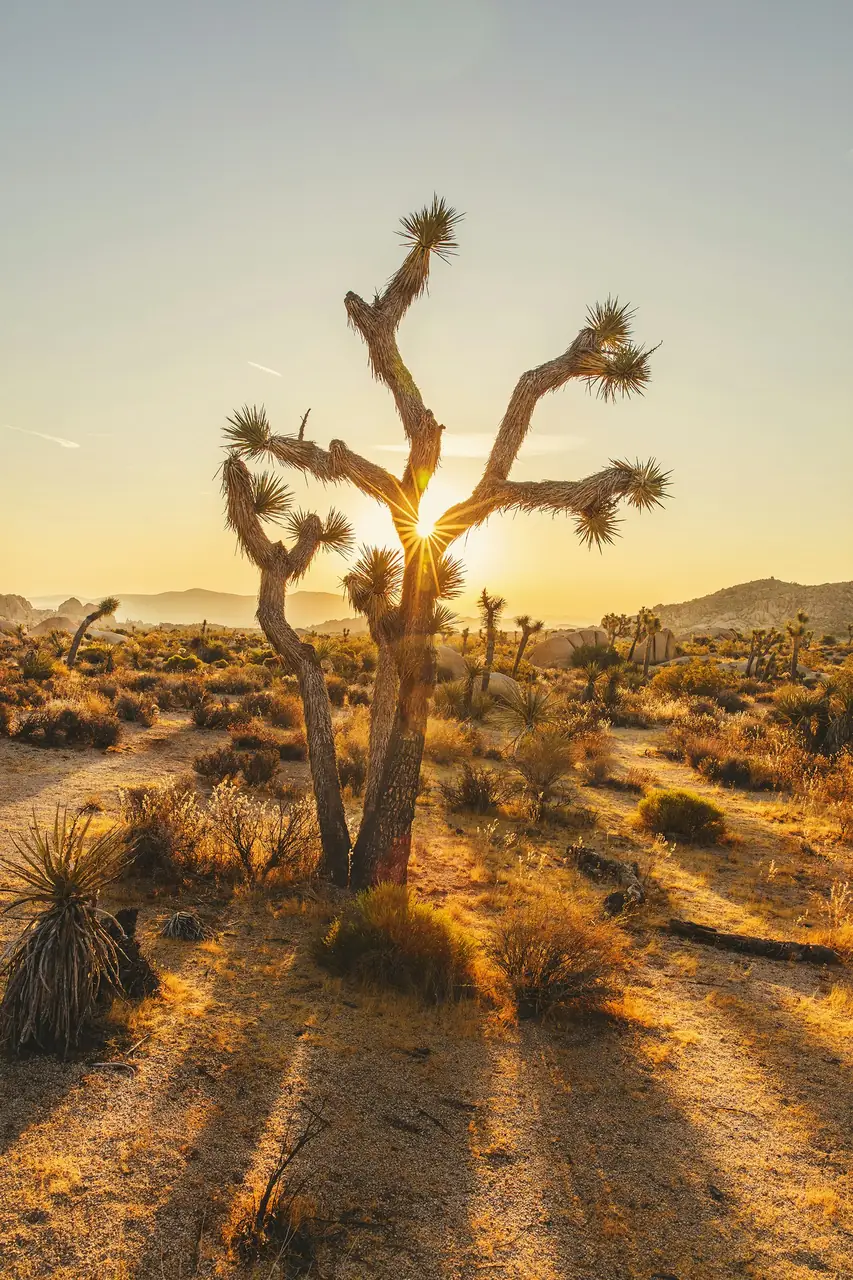
Roughly 140 miles east of Los Angeles, Joshua Tree National Park — “J-Tree” to locals — is one of the most distinctive landscapes in the country. The park sits at a rare ecological crossroads, where the high Mojave Desert meets the low Colorado Desert. It is a land of twisted Joshua trees, vast skies and granite boulders, and it rewards anyone who slows down and looks closely.
The Namesake Trees
The park takes its name from the Joshua tree, a type of yucca whose distinctive, spiky silhouette punctuates the high desert. The trees are a defining part of the scenery, and when they bloom after winter rain the whole landscape shifts. They grow slowly and live for decades, so enjoy them where they stand — the desert is too fragile to leave the trail and crowd around them.
Keys View
For a sweeping panorama, drive up to Keys View, which looks out over the Coachella Valley to Mount San Jacinto, San Gorgonio Mountain and, on a clear day, the Salton Sea beyond. It is the classic sunset viewpoint and a great introduction to the scale of the desert, and the short, paved walk to the overlook makes it accessible to almost everyone.
Ryan Mountain & Skull Rock
Ryan Mountain, at 5,456 feet, is the tallest peak in the park, and the summit hike is a rewarding climb that lays the whole desert out at your feet — bring water and start early in the heat. Easier and more family-friendly is the Skull Rock Nature Trail, a short loop that winds through the famous Wonderland of Rocks, a jumble of smooth, rounded monzogranite boulders that look almost sculpted. Watching the light shift across them at golden hour is one of the park’s finest sights.
Rock Climbing & Historic Sites
Those same granite formations have made Joshua Tree a worldwide climbing destination, with more than 8,000 documented routes. For history, the Lost Horse Mine is a four-mile round-trip walk into the area’s gold-mining past, and the Fortynine Palms Oasis follows a three-mile route to a spring fed by a Native American pathway. A ranger-led Keys Ranch tour tells the story of William F. Keys, who worked the land for six decades and left behind a remarkably intact homestead.
Dark Skies & the Desert Institute
Joshua Tree is one of the best places in Southern California for stargazing, and its dark skies draw astronomers from all over. On a clear night the Milky Way is easily visible, and the park has been designated for its outstanding quality. The Desert Institute runs field classes and naturalist programs that go deeper into the park’s ecology, geology and history — a great way to learn from the people who know it best.
Getting Oriented
The park covers nearly 800,000 acres of some of the most striking terrain in the Southwest, so a bit of planning goes a long way. An entrance fee gets you in for a set number of days, and the main roads connect the park’s west, north and south entrances. A day is enough for the headline stops, but an overnight stay — camping under one of the darkest skies in California — is one of the best ways to appreciate it. Arrive early to beat both the heat and the crowds, especially in peak seasons.
Best Time to Visit
The desert is hottest in summer, when daytime temperatures can be dangerous, so the sweet spots are spring, fall and winter. Spring brings wildflower blooms after a wet winter, while autumn offers crisp, golden light and mild hiking. Whatever the season, pack plenty of water — far more than you think you will need — and make sure you are off the trail before dark.